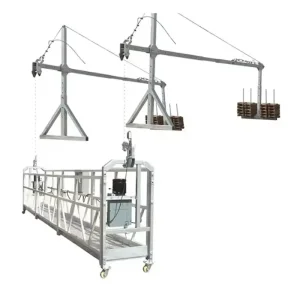
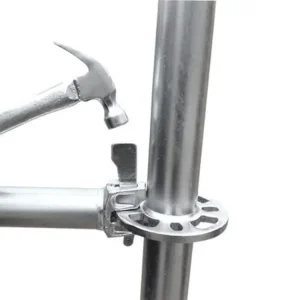
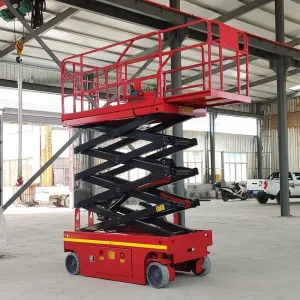
Modern concrete engineering is undergoing a critical paradigm shift. Historically, construction projects relied heavily on traditional plywood and timber beams for casting concrete slabs. While wood has low upfront material costs, its rapid degradation, vulnerability to water damage, and limited reuse cycle create substantial cost-per-use inefficiencies and generate high amounts of construction waste. In response, international engineering firms are transitioning to high-tech, reusable polymer formwork solutions.
Engineered hollow plastic formwork systems can be reused more than 80 to 100 times. This long functional lifespan reduces the amortized cost per casting cycle, outperforming plywood which typically degrades after only 5 to 8 uses.
As green building certifications (such as LEED and BREEAM) become mandatory across Europe, the Middle East, and North America, fully recyclable polymer structural boards help contractors minimize their ecological footprint.
Polymer forms do not absorb water or chemically react with concrete. This design yields a smooth, fair-faced concrete finish that eliminates the need for expensive secondary plastering or grinding.
Advanced hollow structural plastic boards utilize internal honeycomb geometry. This structure matches the stiffness properties of timber while reducing total formwork weight. As a result, the formwork is easier to handle, and construction sites can operate safely without crane-dependent lifting setups for slab formwork installation.
Sourcing directors and project engineers face the challenge of balancing initial equipment investments with long-term field performance. For modern slab construction, procurement specifications focus on four key performance metrics: dimensional stability across wide temperature ranges, concrete chemical resistance, structural load capacity, and system compatibility.
| Performance Indicator | Hollow Plastic Slab Formwork (ODM PP/ABS) | Traditional WBP Plywood Formwork | Steel/Aluminum Slab Formwork |
|---|---|---|---|
| Functional Cycles | 80 - 100+ cycles (100% recyclable) | 5 - 8 cycles (disposed as waste) | 150 - 300+ cycles (high capital input) |
| Weight / Density | Lightweight (approx. 7-8 kg/m²) | Medium (approx. 10-12 kg/m²) | Heavy (requires mechanized crane assistance) |
| Water Absorption | 0% (perfect dimensional stability) | Significant (causes warping and swelling) | 0% (prone to oxidation/corrosion) |
| Concrete Finish | Excellent, smooth, fair-faced finish | Textured, requires concrete release agent | Good, requires continuous maintenance |
| Thermal Range | Stable between -20°C and +90°C | Unstable in high humidity conditions | High thermal expansion coefficient |
As a leading industrial region in Hebei, China, Zhuozhan Group combines automated production lines with raw material supply chains to ensure production reliability for global infrastructure partners. Operating via Hebei Shuangyang Metal Structure Co., Ltd. (founded in 2014) and Laoting Zhuozhan International Trade Co., Ltd., the group delivers high-volume industrial scaffolding and formwork systems to international markets.
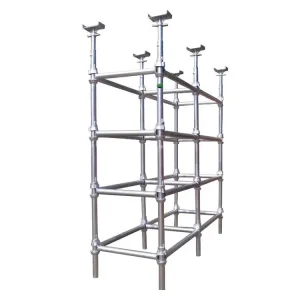
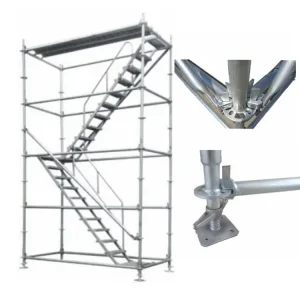
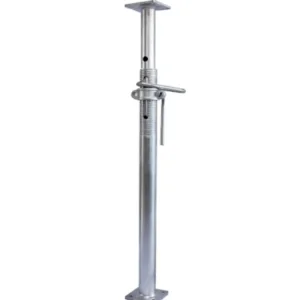
Equipped with over 150 sets of heavy machinery, Hebei Shuangyang Metal Structure Co., Ltd. produces a diverse array of structural components. The company's annual output reaches 300,000 tons of steel pipes, 1,000,000 tons of high-grade modular scaffolding, and 400,000 tons of adjustable steel props and supports. This vertical integration ensures a reliable supply of metal structures and support frames to match the high demand of modern plastic slab formwork installations.
Additionally, the factory is strategically located near three key Chinese shipping hubs: Jingtang Port, Caofeidian Port, and Tianjin Port. This close proximity helps reduce transit times, stabilize shipping rates, and optimize container loading logistics for overseas buyers.
Factory Operations and Automated Ringlock Scaffolding Production Lines
Maintaining structural reliability requires strict manufacturing controls. From raw steel processing to final product inspection, the factory monitors potential pollution points and structural load properties to meet global building code standards (such as EN 12810/12811 and ISO 9001).
Selecting Q355B or Q235 steel tubes and high-grade polymer resins. Cutting and blanking steps generate controlled solid waste and noise.
Using automated machinery to punch structural components, maintaining dimensional tolerances within ±1mm.
Robotic welding systems join the steel pipe with disc parts, ensuring consistent weld depth and load distribution.
Components undergo hot-dip galvanizing to provide corrosion protection and prolong their service life in harsh construction environments.
Formwork and scaffolding systems undergo load-bearing tests to verify support capacities of up to 10 tons per node.
Our structural components and modular support frames are certified under ISO 9001 and EN 12810/12811 standards. This quality management process delivers an average product service life of 15 to 20 years, helping global partners achieve high project margins and maintain site safety.
Zhuozhan Group's scaffolding and formwork systems are utilized across dynamic global environments. The physical properties of engineering plastics and hot-dip galvanized steel make them well-suited for challenging localized projects:
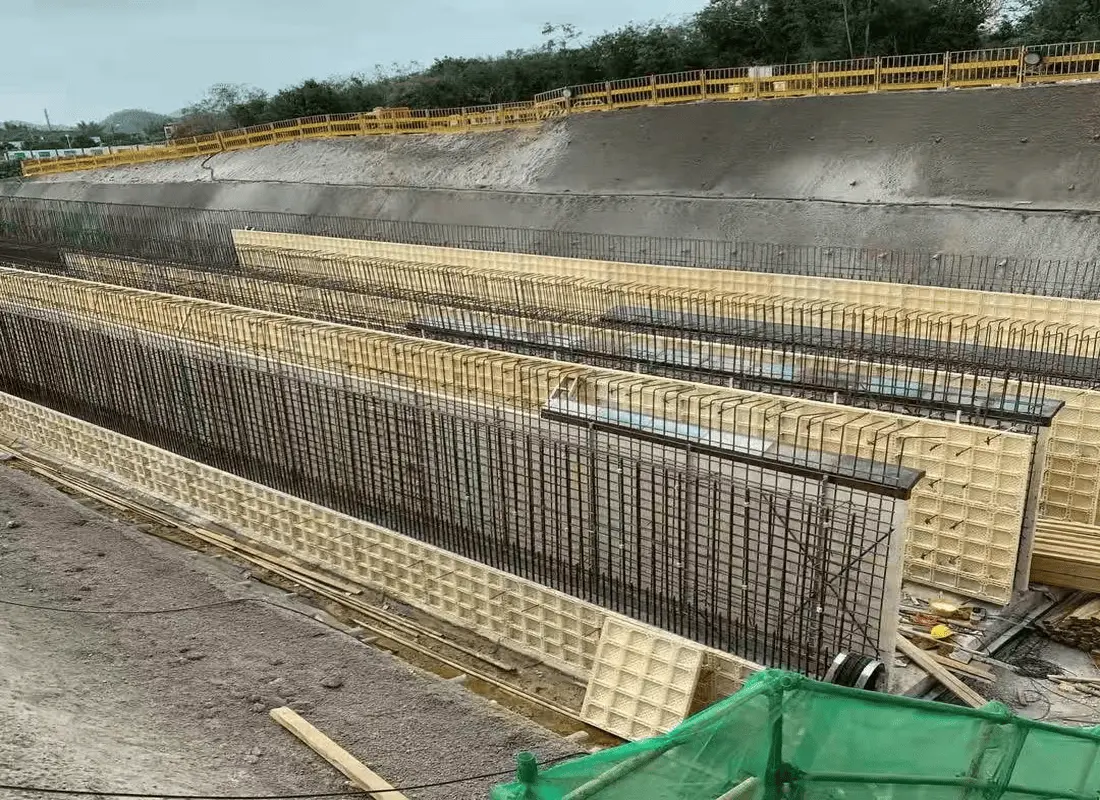
Danube River Channel Renovation – Budapest, Hungary
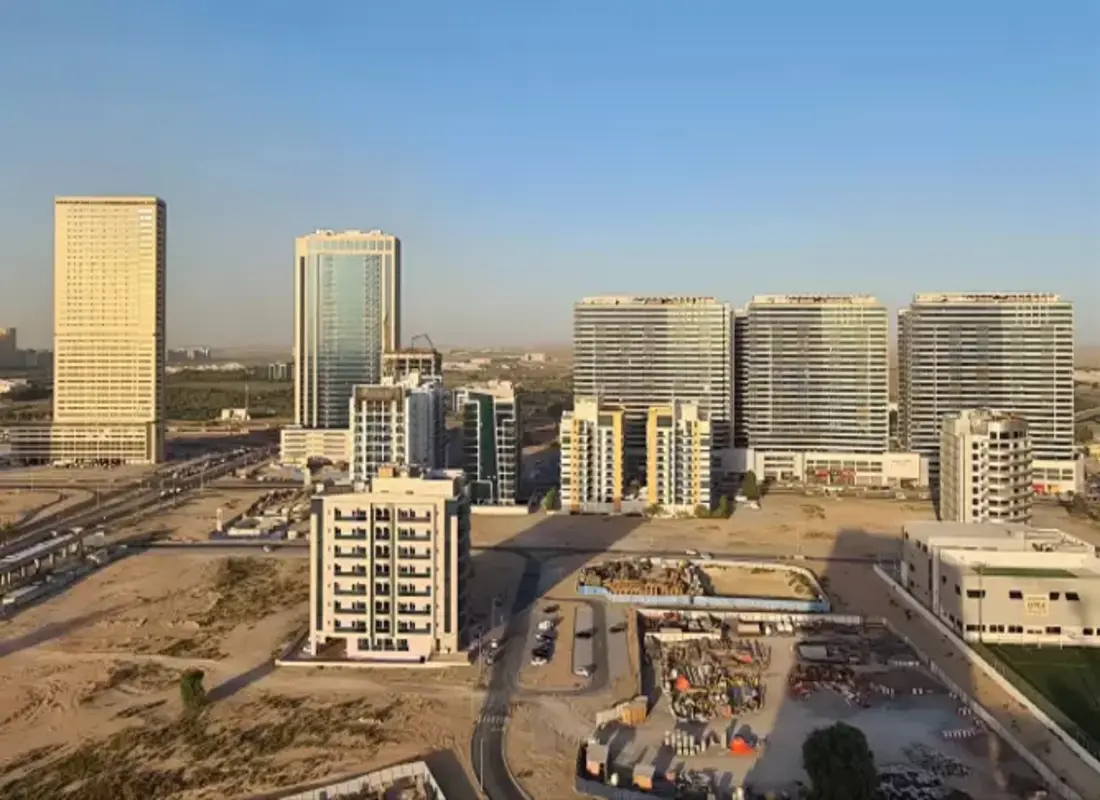
High-Rise Facade Construction – Downtown Dubai, UAE
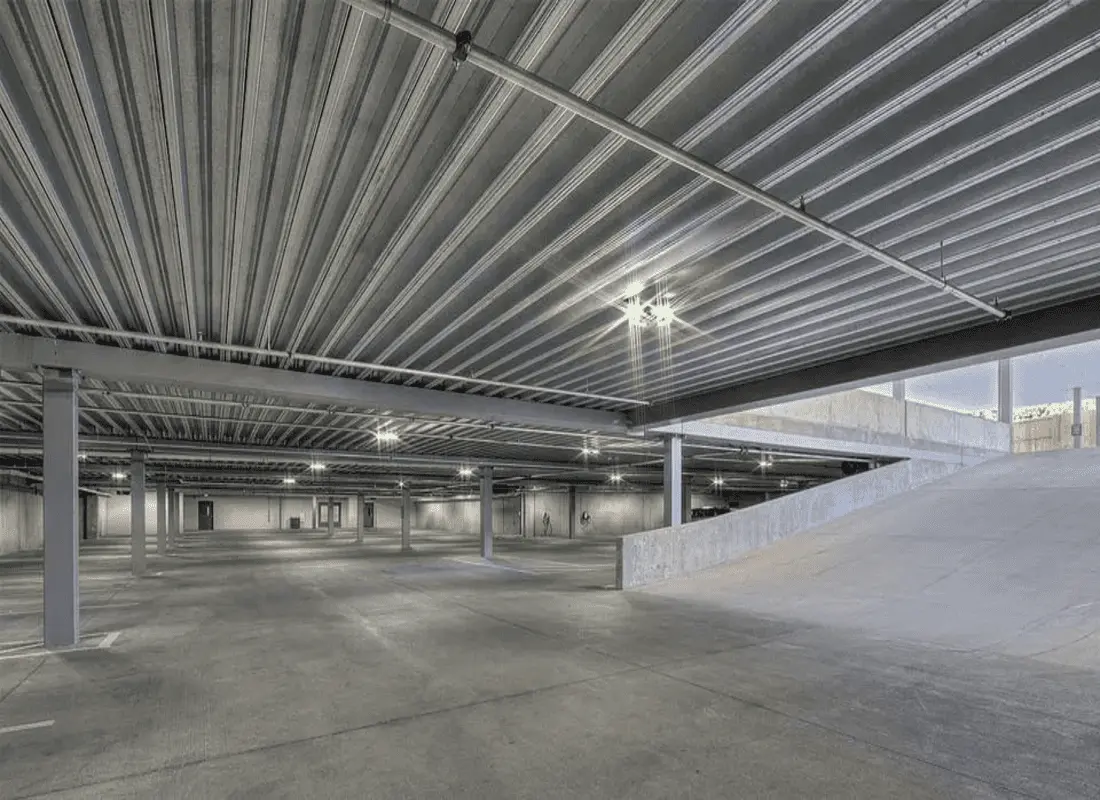
Nanjing South Railway Station Expansion – China
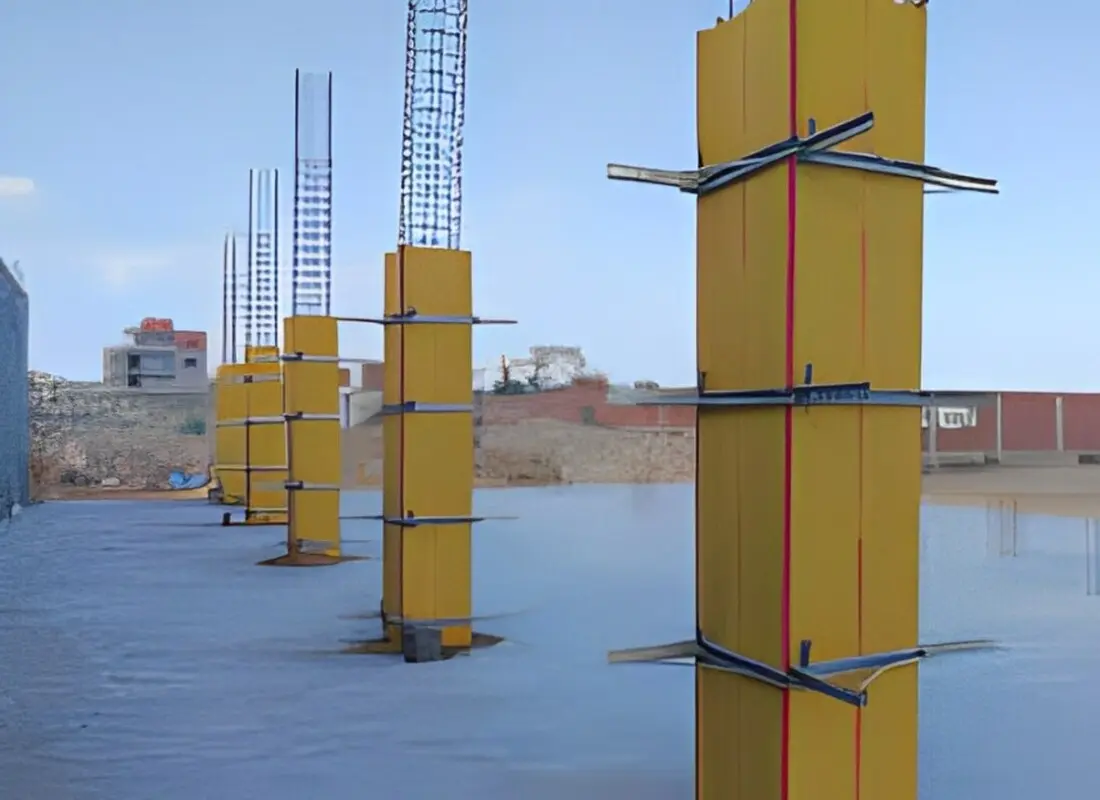
High-Rise Office Tower – Jakarta, Indonesia
In high-humidity regions like Southeast Asia and Central Europe, timber formwork absorbs moisture and warps, which can lead to alignment issues. Hollow plastic slab formwork maintains dimensional stability, allowing contractors to cast slabs of consistent thickness even in damp coastal zones.
In regions like Dubai and Riyadh, hot climates accelerate the drying and cracking of plywood. Under these conditions, heat-resistant plastic formwork helps concrete retain moisture during hydration, preventing cracking and ensuring structural integrity.
Explore our manufacturing processes and international warehouse facilities to see how we maintain consistent product quality and supply chain capacity.
Ringlock Scaffold Stock & Warehouse Capacities
High-Strength Self-Locking Design Demo
Factory Operations & Production Overview
Find answers to common questions about ODM plastic slab formwork systems, procurement options, and installation parameters.
 Zhuozhan