Explore our engineering systems optimized for high durability, structural safety, and efficient deployment.
A technical examination of load-bearing capacities, deflection limits, and safety regulations in high-rise and infrastructural construction.
In modern structural engineering, concrete slab formwork represents the foundational matrix that guarantees structural integrity, spatial accuracy, and worker safety during high-rise vertical developments. As structural designers transition towards larger spans and complex geometry, formwork systems must support massive dynamic and static loads. Engineering teams face the critical challenge of preventing structural sagging, minimizing joint deflection, and maintaining precise surface alignments.
Traditional wood frame shuttering has struggled to meet modern efficiency, safety, and durability demands. The market has shifted towards modular, high-load structural steel systems, lightweight engineered plastics, and engineered timber beam assemblies (like the H20 model). Selecting the right shoring configuration directly affects building safety margins, installation speed, and overall project costs.
Formwork systems engineered with Q355B high-yield structural steel support loads of up to 10 tons per prop—nearly 1.5 times the capacity of traditional Q235 steel systems.
Our automated production processes maintain a dimensional tolerance limit of ±1mm, preventing assembly friction and load eccentricities on site.
Engineered for global standards, our systems fully comply with EN 12810/12811 for scaffolding stability and ISO 9001 quality management procedures.
A unified manufacturing ecosystem integrating structural research, advanced metallurgy, and high-volume logistics.
Zhuozhan Group is a diversified structural manufacturing enterprise that integrates scientific research, precision manufacturing, and international logistics. Through key subsidiaries like Laoting Zhuozhan International Trade Co., Ltd. and Hebei Shuangyang Metal Structure Co., Ltd., the group has become a core manufacturer and supplier for global construction infrastructure projects.
Founded in 2014, Hebei Shuangyang Metal Structure Co., Ltd. operates a modern manufacturing facility covering 13,132.68 square meters, with a total building floor area of 7,124.58 square meters. Shuangyang has secured 15 national design and structural utility patents, proving a strong commitment to manufacturing innovation.
We treat product quality as the lifeline of our company. From raw material inspection to automated weld line monitoring and hot-dip galvanizing, each step meets strict structural tolerance standards to deliver dependable support systems on site.
We aim to lead the global structural hardware industry by developing innovative, resource-saving formwork solutions. Through ongoing product refinement, we help construction teams build more safely, efficiently, and sustainably.
An engineering comparison of structural steel, engineered timber, and modular plastic formwork components.
| Material System | Load Capacity (per unit) | Reuse Lifecycles | Installation Speed | Eco-Impact & Recycling | Typical Applications |
|---|---|---|---|---|---|
| Q355B Steel Props | High (Up to 10 Tons) | 150+ Cycles | Medium (150-300 sqm/day/man) | 100% Recyclable | High-rise commercial floors, heavy bridges, industrial facilities |
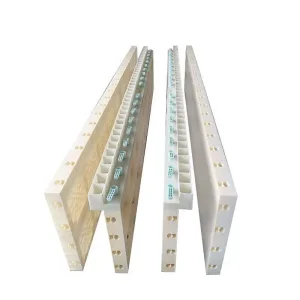
| Modular Plastic Formwork | Medium-Low | 80+ Cycles | Fast (Eco-friendly, lightweight) | Recyclable Polymer | Residential housing projects, retaining walls, highway curbs |
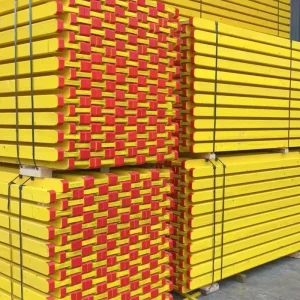
| H20 Timber Beam System | Medium-High | 30-50 Cycles | Slow (Requires skilled cutting) | Biodegradable / Timber waste | Bridge girder shuttering, complex architectural structures |
| Traditional Timber Planks | Low | 5-10 Cycles | Very Slow (High manual labor) | Low (Rapid degradation) | Low-rise residential developments, custom columns |
A step-by-step review of our production process, outlining emissions control and quality management stages.
High-tensile raw steel pipes are cut to design specifications. Noise (N) and steel scrap solid waste (S) are managed via acoustic shields and raw metal recycling systems.
Automated press punches create connection slots. Acoustic dampers reduce noise emissions, while collection bins capture steel filings for recycling.
Robotic arms weld the steel pipe to the disc plate. Fume extraction hoods capture welding emissions (G) to protect operators and keep the workspace safe.
Welded components undergo hot-dip galvanizing to form a protective zinc coating (minimum 80 microns thickness) for high corrosion resistance.
Quality control technicians check dimensional tolerances to verify full compliance with international standards before packaging and shipping.
Steel tubes are cut to length for ledger assemblies. Automated systems optimize cuts to reduce steel waste and minimize scrap material.
Connecting ends are punched to design limits. Scrap metal is reclaimed, and mechanical noise is managed with enclosure shields.
Cast steel connection heads are welded to the tube ends. This process is monitored with automated visual inspection cameras to confirm weld quality.
Components are treated with a corrosion-resistant zinc layer to extend the product's service life, especially in coastal or high-humidity construction sites.
Locking pins are riveted into the ledger heads. Riveting machines are designed to operate quietly and safely, keeping work noise levels low.
A review of our engineering systems in municipal, commercial, and high-rise developments worldwide.
Our heavy-duty adjustable steel shoring props supported thick concrete transfer slabs, maintaining alignment stability under high-load transit areas.
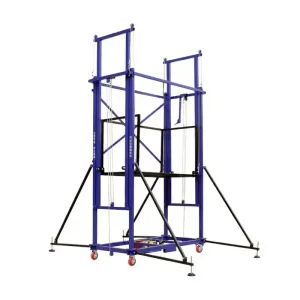
Supplied specialized frame scaffolding to support historic facade masonry, conforming to European restoration safety standards.
Used modular, water-resistant plastic formwork to pour concrete retaining structures, offering simple assembly and reliable performance in wet conditions.
Our steel bridge formwork and H20 timber beam shoring supported complex cantilever pours, ensuring stable structure alignments throughout construction.
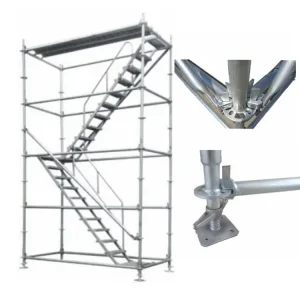
Our hot-dip galvanized ringlock scaffolding provided stable working platforms at heights above 200 meters, showing excellent wind resistance.
Constructed a heat-resistant maintenance platform using heavy-duty ringlock scaffolds, ensuring worker safety during plant operations.
How the integration of smart manufacturing, structural sensors, and high-strength alloys is shaping the future of formwork systems.
Our research and development team is working to incorporate micro-alloyed elements into our structural steel. This upgrade aims to increase tensile strength to over 500 MPa, allowing for lighter props that maintain the same high load capacity.
We are testing smart pressure-sensitive caps for steel supports. These sensors track real-time load distribution during concrete pours, warning engineering teams of load anomalies or safety issues.
A procurement guide for international buyers to ensure compatibility and safety compliance.
For international buyers and procurement teams, sourcing structural formwork systems requires careful checking of material certificates, weld strength, and corrosion-resistant finishes. Systems that do not meet regulatory standards can cause delays, structural failures, and safety issues on site.
Confirm that the structural steel meets mill test report specifications, matching standards like EN 10025 for Q355B or ASTM A572 Grade 50 steel.
Ensure that all structural connection discs are welded on automated lines. Main structural welds should undergo non-destructive testing (NDT) to prevent failures under shear stress.
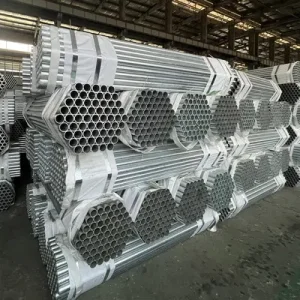
For seaside or tropical construction projects, request hot-dip galvanization with a minimum thickness of 80 microns to protect against corrosion and oxidation.
Our manufacturing facility is located near three major shipping hubs: Jingtang Port, Tianjin Port, and Caofeidian Port. This close proximity helps us secure competitive container shipping rates, simplify customs processing, and ensure on-time delivery for international projects.
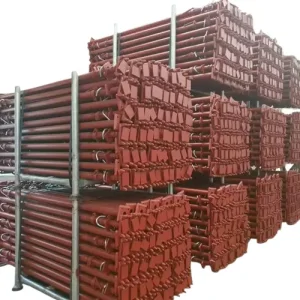
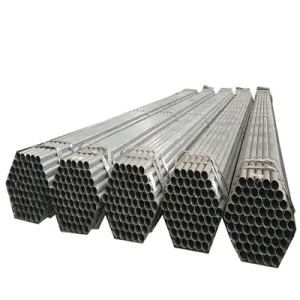
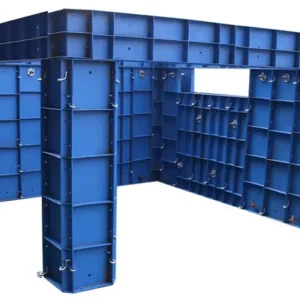
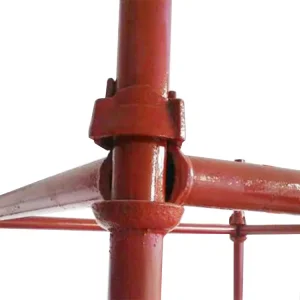
Explore our heavy-duty structural shoring props, galvanized pipes, and scaffolding configurations.
Technical answers to common questions about concrete slab formwork, load calculations, and global supply logistics.
 Zhuozhan