Choosing the best Galvanized Scaffolding supplier requires more than comparing prices. It requires evidence, site experience, and careful technical questions. The wrong supplier may deliver shiny tubes with inconsistent coating thickness, incomplete certificates, or poorly fitted couplers. That mistake can become expensive quickly.
OSHA’s Scaffold Safety Fact Sheet reports that scaffolding accidents cause approximately 4,500 injuries and 50 deaths annually in the United States. These figures make supplier verification essential. The American Galvanizers Association’s technical guidance also explains that zinc coating life depends on exposure conditions, coating thickness, and the surrounding environment. Rural, coastal, and industrial sites should not receive identical specifications. They should not.
Corrosion specialist Dr. M. G. Fontana wrote, “Corrosion is the deterioration of a material or its properties because of a reaction with its environment.” His statement remains highly relevant when evaluating Galvanized Scaffolding. A dependable supplier should provide coating inspection records, steel-grade information, load-capacity documentation, and traceable batch numbers. Confirm compliance with applicable standards, such as EN 12811-1, AS/NZS 4576, or local requirements. Verify production capacity, packaging quality, replacement support, and delivery history. Ask for references from comparable construction projects. Photographs help, but independent records matter more. A supplier’s website is not proof. A polished brochure can hide weak quality control. The best decision balances engineering evidence, reliable communication, and realistic project experience. This process may feel slower, yet it can prevent unsafe assumptions and costly rework.
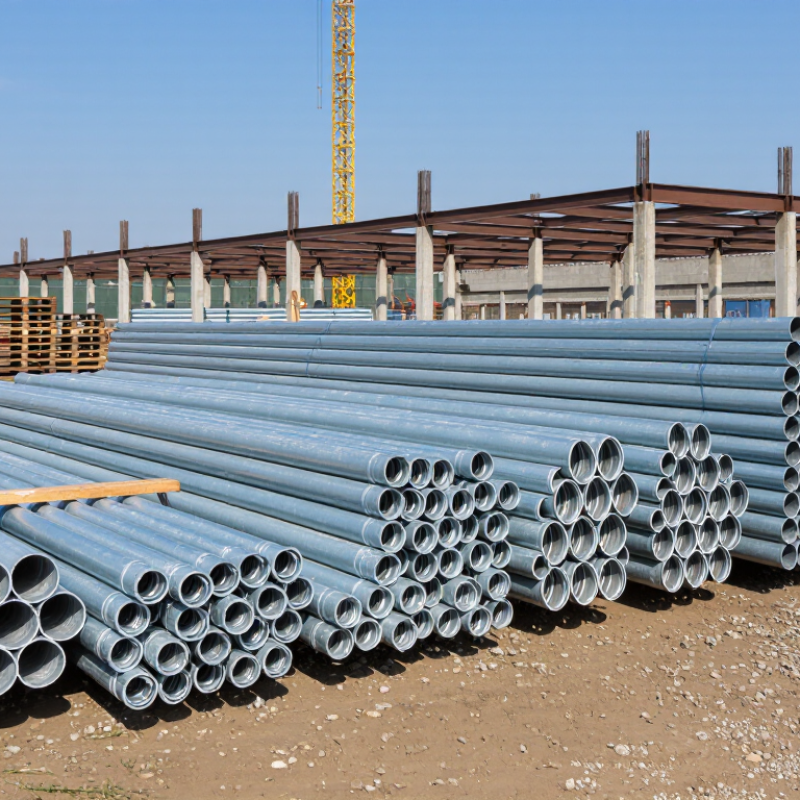
Before contacting suppliers, define the scaffold’s actual working conditions. Record platform height, bay length, access points, expected loads, wind exposure, and erection space. A plastering crew needs different capacity from a brickwork crew. Do not rely on “heavy duty” as a specification.
OSHA’s 2022 Census of Fatal Occupational Injuries reported 865 fatal falls, slips, and trips in the United States. The figure shows why access planning cannot be treated as paperwork. Specify guardrails, toe boards, safe access, base support, and inspection responsibilities. Also state the required standard, such as EN 12811-1 or applicable national rules. Ask for load calculations, material certificates, welding records, and galvanizing inspection results. Zinc coating thickness matters, especially where frames face rain, salt, or repeated handling.
Think beyond the quotation.
A dependable supplier should match tube dimensions, couplers, decking, and loading classes to your design. Request samples of batch numbers and traceability documents. Check whether replacement parts remain available during the project. A low price can become expensive when one missing brace delays erection.
The American Society of Safety Professionals emphasizes competent planning and inspection in scaffold operations. Your supplier should explain who performs those checks and how defects are recorded. I would still challenge every assumption. A checklist may look complete, yet ignore soft ground or forklift impact. Real sites are rarely tidy. Define those imperfect conditions before comparing suppliers, not after the first damaged component appears.
How to Choose the Best Galvanized Scaffolding Supplier?
A reliable supplier should provide clear certification records, not vague claims. Check whether its quality system follows ISO 9001 or an equivalent standard. Product certifications should match the exact scaffolding type, dimensions, and intended load. Ask for current inspection reports from qualified, independent laboratories. Old documents may not represent present production.
Quality control must continue from steel purchasing to final packing. Request material certificates, weld inspection records, galvanizing thickness results, and load-test data. A professional supplier should trace each batch through labels or production codes. Inspect sample tubes closely. The zinc coating should look continuous, without serious peeling, bare patches, or heavy lumps. Small defects matter.
Compliance is more than paperwork. Confirm that designs follow applicable local safety rules and recognized scaffolding standards. Ask how rejected components are isolated and recorded. During a factory visit, observe storage areas, measuring tools, and worker procedures. Clean records are encouraging, but they are not proof by themselves. In site evaluations, paperwork sometimes looks perfect while product markings tell another story. That gap deserves questions. A supplier that welcomes audits, explains limits, and corrects mistakes is usually more dependable. No supplier is flawless. Their response to an error may reveal more than a polished certificate.
Evaluate supplier certifications, quality controls, and compliance records before placing an order. Coating thickness is one practical quality-control indicator, but the applicable product standard should always be confirmed for the specific scaffolding tube or component.
Reference: ISO 1461 minimum mean coating thickness values for non-centrifuged steel articles. Ask suppliers for verifiable inspection reports, batch traceability, and evidence of compliance with the standards required in your market.
Material choice affects strength, weight, service life, and handling. High-quality structural steel should have consistent wall thickness and verified mechanical properties. Thin tubes may reduce cost, but they can bend during repeated assembly. Hot-dip galvanizing usually provides a thicker, more durable zinc coating than electro-galvanizing. It performs better in wet, industrial, and coastal environments. However, coating quality depends on surface cleaning, zinc temperature, and drainage design.
The design should match the work, not only the catalog image. Frame scaffolding suits repetitive building façades, while modular systems offer better flexibility around tanks, stairs, and uneven layouts. Check locking points, base jacks, brace connections, platform fit, and allowable loads. Welded joints need special attention because poor preparation can create bare spots after galvanizing. Ask for coating thickness records, steel test certificates, dimensional inspection reports, and traceable batch information. A supplier that explains weaknesses clearly is often more reliable than one promising perfection.
Tips: Request a sample tube and inspect its surface, threads, welds, and zinc coverage. Compare design drawings with your actual site measurements. Confirm load calculations with a qualified engineer. Ask how damaged coating is repaired after cutting or drilling. Do not ignore small details. They become expensive later. One practical mistake is choosing a supplier by price alone; transport, assembly time, rejected parts, and maintenance can change the final cost.
Choosing the best galvanized scaffolding supplier requires more than comparing prices. Start by checking production capacity against your project schedule. A capable supplier should explain monthly output, available equipment, workforce levels, and peak-season limitations. Ask for recent inspection records, material certificates, and load-test procedures. Photos help, but traceable documents are stronger evidence.
Delivery reliability deserves equal attention. Request a realistic production timeline, packaging plan, and shipment schedule before placing an order. Confirm how the supplier handles steel shortages, port delays, or sudden design changes. A dependable supplier provides updates before a problem becomes urgent. Small details matter, such as labeled bundles, protected couplers, and clear packing lists. These details reduce counting errors on a busy site.
Customer support often reveals the supplier’s real professionalism. Test response times with technical questions about tube thickness, surface coating, compatible fittings, and replacement parts. Helpful teams give precise answers instead of vague promises. They should also provide drawings, installation guidance, and a clear process for reporting damaged goods. Do not trust flawless claims. I have found that even experienced suppliers can miss a detail when specifications change late. That is why written confirmations, sample checks, and milestone inspections remain valuable. Keep communication practical, documented, and easy for both sides to verify.
Price is only the opening figure when selecting a galvanized scaffolding supplier. Compare quotes by component weight, loading class, transport, erection support, and replacement terms. A cheaper frame may use thinner sections or provide weaker documentation. OSHA’s scaffold safety guidance reports about 4,500 injuries and 50 deaths annually in the United States. Supplier competence matters.
Warranty language needs close inspection. Ask whether it covers structural defects, weld failures, galvanizing damage, and premature corrosion. AGA corrosion-rate tables indicate zinc may corrode below 0.1 micrometres yearly in rural environments, but industrial or marine exposure can be far harsher. Request coating thickness records, batch traceability, inspection reports, and conformity with applicable standards such as ISO 1461. Paperwork is practical evidence.
Long-term value also includes response time. Can the supplier replace bent braces within 48 hours? Are spare couplers available locally? Does technical support understand changing site loads and weather exposure? Calculate total cost over several projects, not one delivery. I have seen low bids become expensive after missing parts and delayed certificates. Still, premium pricing does not automatically prove quality. Review payment terms, warranty exclusions, maintenance advice, and at least three comparable references. A written service-level commitment is stronger than friendly promises.
Comparative benchmark of typical galvanized scaffolding supplier offers. Prices are indicative market ranges and should be verified through formal quotations, technical documents, and contract terms.
| Evaluation Dimension | Supplier Profile A | Supplier Profile B | Supplier Profile C | Supplier Profile D | Supplier Profile E |
|---|---|---|---|---|---|
| Typical supplier type | Regional manufacturer | Large-volume exporter | Specialist rental supplier | Trading and distribution company | Custom-engineering supplier |
| Indicative price per standard frame set | US$85–110 | US$68–92 | US$105–145 | US$78–118 | US$125–180 |
| Hot-dip galvanized coating thickness | 70–85 μm | 60–75 μm | 75–90 μm | 55–75 μm | 80–100 μm |
| Common steel grade offered | S235 or equivalent | S235 or equivalent | S355 or equivalent | S235 or equivalent | S355 or equivalent |
| Standard product warranty | 12 months | 12 months | 24 months | 12 months | 36 months |
| Replacement policy for manufacturing defects | Free replacement after inspection | Replacement or credit note | Free replacement within warranty | Case-by-case resolution | Free replacement plus expedited shipment |
| Typical production lead time | 20–30 days | 30–45 days | 10–20 days | 15–25 days | 35–55 days |
| Minimum order quantity | 1 container | 2–3 containers | 10 complete sets | 1 container | 25 complete sets |
| Quality documentation typically available | Mill certificates and inspection report | Mill certificates and packing list | Inspection report and maintenance records | Basic material and packing documents | Mill certificates, test reports, and traceability records |
| Standards support commonly requested | EN 12810/12811 documentation | Regional or project-specific requirements | EN 12810/12811 documentation | Limited unless specified in contract | EN 12810/12811 and engineered calculations |
| After-sales technical support | Standard installation guidance | Remote support during business hours | Site assessment and maintenance advice | Order and logistics support | Engineering review and project support |
| Estimated service life with proper maintenance | 10–15 years | 8–12 years | 12–18 years | 8–12 years | 15–20 years |
| Best suited for | Medium-sized construction projects | Large-volume and price-sensitive orders | Short-term projects and rental fleets | Flexible stock replenishment | Complex or high-load applications |
| Long-term supplier value score | 8.2 / 10 | 7.5 / 10 | 8.7 / 10 | 7.1 / 10 | 9.1 / 10 |
Record platform height, bay length, access points, working loads, wind exposure, and erection space. Small details matter. Describe the actual crew and tasks, such as plastering or brickwork. Avoid vague terms like “heavy duty.”
Specify guardrails, toe boards, safe access, stable bases, and inspection responsibilities. Include soft ground and vehicle impact risks. Ask who performs inspections and how defects are recorded.
Check structural steel quality, wall thickness, mechanical properties, and component weight. Thin tubes may bend during repeated assembly. Request steel certificates and traceable batch information.
Hot-dip galvanizing usually provides thicker zinc protection than electro-galvanizing. It suits wet, industrial, and coastal environments. Quality still depends on cleaning, temperature, drainage, and weld preparation.
Frame systems suit repeated building façades and regular work areas. Modular systems provide more flexibility around tanks, stairs, and uneven layouts. Compare drawings with real site measurements. Catalog images can mislead.
Request load calculations, material certificates, welding records, coating measurements, and dimensional inspection reports. Ask for applicable standard conformity, such as EN 12811-1. Paperwork is useful evidence, but it does not replace physical inspection.
Compare component weight, loading class, transport, erection support, spare parts, and replacement terms. A low quotation may hide delays from missing braces or rejected parts. Calculate costs across several projects, not one delivery.
Confirm coverage for structural defects, weld failures, coating damage, and early corrosion. Ask whether replacement braces can arrive within 48 hours. Check local coupler availability and technical support. Friendly promises are not enough. I would still challenge premium pricing.
Choosing the best Galvanized Scaffolding supplier begins with clearly defining your project requirements, including load capacity, scaffold type, dimensions, working height, site conditions, and applicable safety standards. A reliable supplier should provide clear evidence of certifications, quality-control procedures, material traceability, and compliance with relevant construction regulations. It is also important to compare steel grades, component designs, connection systems, surface protection, and galvanizing methods to ensure long-term strength, corrosion resistance, and safe performance.
Beyond product quality, assess the supplier’s manufacturing capacity, inventory levels, lead times, packaging, and delivery record. Responsive technical support and dependable after-sales service can prevent costly project delays. When comparing prices, consider the complete value rather than the lowest quotation alone, including product lifespan, maintenance needs, warranty coverage, replacement availability, and customization options. A supplier that combines consistent quality, reliable logistics, transparent communication, and fair long-term support is more likely to meet both immediate project needs and future construction demands.