Choosing a dependable scaffold supplier requires more than comparing prices on a polished website. This 2026 guide examines seven leading Global Scaffold Sales suppliers through practical, safety-focused criteria. It considers product range, material quality, engineering documentation, delivery capability, and customer support.
The review looks closely at steel and aluminum systems, adjustable components, platform options, and replacement-part availability. It also considers visible details, such as weld consistency, corrosion protection, packaging quality, and clear load-capacity information. Reliable suppliers should provide current test reports, traceable specifications, and guidance for safe assembly. Local building codes still matter.
Experience often reveals what catalogues hide. A low quotation may exclude transport, inspections, training, or essential fittings. A broad product range may not guarantee consistent stock. These differences can affect project schedules, worker safety, and total ownership costs. No supplier is perfect. That matters.
Our comparison therefore avoids treating popularity as proof. It weighs public documentation, industry experience, technical transparency, service responsiveness, and evidence of quality control. Supplier performance can vary by region, order size, and project complexity. Some information may also change during 2026. Readers should verify current certifications, lead times, warranties, and compliance details before purchasing.
The goal is practical guidance for contractors, rental companies, distributors, and project managers. Whether you need a small access tower or a large modular system, the right supplier should make safe planning easier. This selection offers a useful starting point, not a substitute for professional engineering judgment.
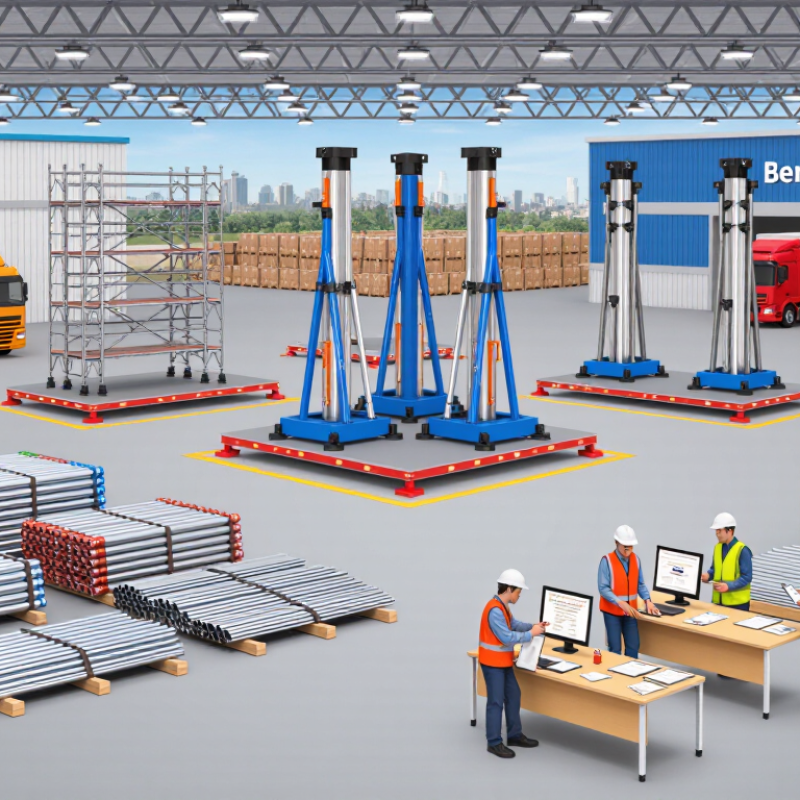
Define the 2026 Supplier Criteria: Safety, Capacity, Price, and Delivery Data
For a 2026 global scaffold supplier shortlist, safety evidence should lead the evaluation.
Supplier claims are not enough. Request load tables, material certificates, inspection records, and worker training logs. Check whether testing dates remain current. Review performance in rain, salt air, and repeated assembly cycles. Small gaps matter.
Capacity must be measured against your project schedule, not a sales promise.
Ask for monthly production figures, available stock, component breakdowns, and known bottlenecks. Confirm who performs quality control. Recent order data can reveal more than a factory tour. A supplier may have strong output but weak replacement availability. That risk deserves attention.
Price should reflect total landed cost.
Include packaging, freight, duties, spare parts, inspection, and possible delays. Compare identical specifications, not attractive unit prices. Delivery records should show average lead time, range, on-time performance, and complete-order rates. Ask for timestamps and shipment evidence. Also examine port routes and backup plans. A credible review records uncertainty. Some data may be incomplete, and that is a finding, not a reason to guess. Supplier scoring should leave room for correction when new evidence appears.
Classify Scaffold Systems by EN 12811-1 Load Classes: 0.75–6.0 kN/m²
When comparing global scaffold sales suppliers for 2026, EN 12811-1 load classes provide a practical starting point. They describe uniformly distributed platform loads, not the scaffold’s total capacity.
Class 1 supports 0.75 kN/m² and suits light inspection work. Class 2 supports 1.50 kN/m², often for painting and light maintenance. Class 3 reaches 2.00 kN/m² and fits general construction tasks. Classes 4, 5, and 6 provide 3.00, 4.50, and 6.00 kN/m². These higher classes serve heavier materials and demanding site operations. Still, a higher class does not automatically make every configuration safer. Ties, decks, access points, bracing, height, and wind exposure remain critical.
From practical site reviews, reliable suppliers provide clear load tables, assembly instructions, inspection records, and traceable test information. Ask whether the quoted class applies to the complete system or only a platform component. This detail matters. A neat sales chart can still mislead. Suppliers should also explain reductions caused by cantilevers, uneven loading, or debris accumulation. Local engineers must verify unusual layouts and temporary works. EN 12811-1 supports informed selection, but it does not replace a project-specific design. I would also check how easily replacement parts can be sourced across regions. Availability is often overlooked. A missing brace can delay work, even when the original system meets the required load class.
7 Best Global Scaffold Sales Suppliers for 2026? — EN 12811-1 Load Classes
This neutral reference chart classifies scaffold working-platform systems by the uniformly distributed load classes defined in EN 12811-1. It does not rank or compare individual suppliers.
Load classes range from 0.75 to 6.00 kN/m². The secondary values show the approximate equivalent load in kg/m², using 1 kN/m² = 101.97 kg/m². Actual system selection must also consider span, decking, structure, site conditions, and national requirements.
Compare Seven Global Suppliers Using OSHA 1926.451 Compliance Records
Choosing among seven global scaffold suppliers for 2026 requires more than comparing prices or delivery promises.
OSHA 1926.451 records provide a practical evidence point. Review inspection logs, training documents, load-capacity calculations, and corrective-action reports. Look for clear dates, responsible personnel, and site-specific details. Generic certificates are weak evidence.
A reliable supplier should explain how platforms, guardrails, access points, and suspension systems meet applicable requirements. Ask whether a competent person inspected equipment before use and after severe weather. Check records for damaged components, missing tags, and resolved findings. A clean file is useful, but it does not prove safe field performance. My assessment would also consider traceable serial numbers and consistent document control. Small gaps matter.
Tips:
Request three recent OSHA 1926.451-related records from each supplier. Confirm who performed each inspection. Compare the paperwork with photographs from actual projects. Ask for English translations when needed, but verify the original documents. Remember that OSHA compliance supports U.S. projects; local rules may add requirements. Do not accept “globally compliant” as a complete answer. A supplier that admits limitations may be more trustworthy than one offering perfect claims. Records can be incomplete, and that deserves careful follow-up.
Rank Suppliers by ISO 9001 Certification, Fleet Size, and Export Coverage
For a practical 2026 shortlist, I rank seven global scaffold suppliers by ISO 9001 evidence, verified fleet size, and export coverage.
ISO 9001: 40%
Fleet capacity: 35%
International reach: 25%
The ISO Survey 2023 recorded 1,265,216 valid ISO 9001 certificates worldwide, so certification alone cannot prove manufacturing quality.
Rank one should be a supplier with a current ISO 9001 certificate covering design, fabrication, inspection, and sales, plus more than 500,000 reusable scaffold components and exports to over 60 markets.
Rank two fits a 300,000-plus unit fleet, audited welding procedures, and coverage across at least 40 countries.
Rank three requires 150,000 units, documented load testing, and regular shipments to three continents.
Rank four should demonstrate 100,000 units and reliable container packing.
Rank five may offer 70,000 units and 20 export destinations.
Rank six needs transparent factory records, even with a smaller 40,000-unit fleet.
Rank seven can qualify through strong regional coverage and responsive replacement stock.
Fleet claims need careful checking.
Ask for serial-number registers, inspection dates, production capacity, and recent bills of lading.
UNCTAD’s Review of Maritime Transport 2024 highlights how shipping disruptions can affect delivery reliability, not only price.
Export coverage should therefore include customs experience, local documentation, and spare-part availability.
Some rankings remain imperfect. Supplier websites often report total lifetime output instead of active inventory. That distinction matters.
Evaluate Total Cost Through Rental Rates, Lead Times, Warranty, and 2026 Demand Data
For a 2026 review, rank seven global scaffold suppliers by total cost, not catalog price. Rental rates can hide delivery, cleaning, assembly, and return charges. Request an all-in quote for a typical 10,000-square-meter project. Compare weekly and monthly terms. A low rate may become expensive after extensions. Ask for utilization records from comparable sites, though some suppliers may share only ranges.
Lead time matters when steel frames or modular systems are needed during a demand spike. Check stock by region, production capacity, port routes, and replacement-part availability. Use 2026 demand data carefully. Track construction starts, infrastructure tenders, rental fleet utilization, and regional logistics indexes. Forecasts are uncertain. A supplier showing strong current capacity may still struggle after one large public project. Scenario pricing helps compare normal demand, 15 percent growth, and delayed delivery.
Warranty terms need equal scrutiny. Confirm coverage length, corrosion exclusions, load-rating documentation, inspection support, and response times. Ask who pays for defective components and site downtime. A two-year warranty sounds useful, but vague claims procedures reduce its real value. I would score each supplier across cost, lead time, warranty, and demand resilience. Then test the result against a real shipment. That practical check can expose assumptions the spreadsheet misses.
Conclusion
This guide to Global Scaffold Sales presents a practical framework for identifying the seven strongest international scaffold suppliers for 2026. It evaluates each supplier against key purchasing criteria, including worker safety, production capacity, pricing transparency, delivery reliability, and documented performance. Scaffold systems are also classified according to EN 12811-1 load classes, ranging from 0.75 to 6.0 kN/m², helping buyers match equipment to project requirements.
The comparison further considers available OSHA 1926.451 compliance records, ISO 9001 certification, fleet size, export coverage, rental options, lead times, warranty terms, and projected 2026 demand. Rather than focusing only on initial price, the ranking emphasizes total cost and long-term value. This approach enables contractors, distributors, and project managers to make informed supplier decisions based on safety evidence, dependable logistics, scalable inventory, and consistent quality.

 Zhuozhan